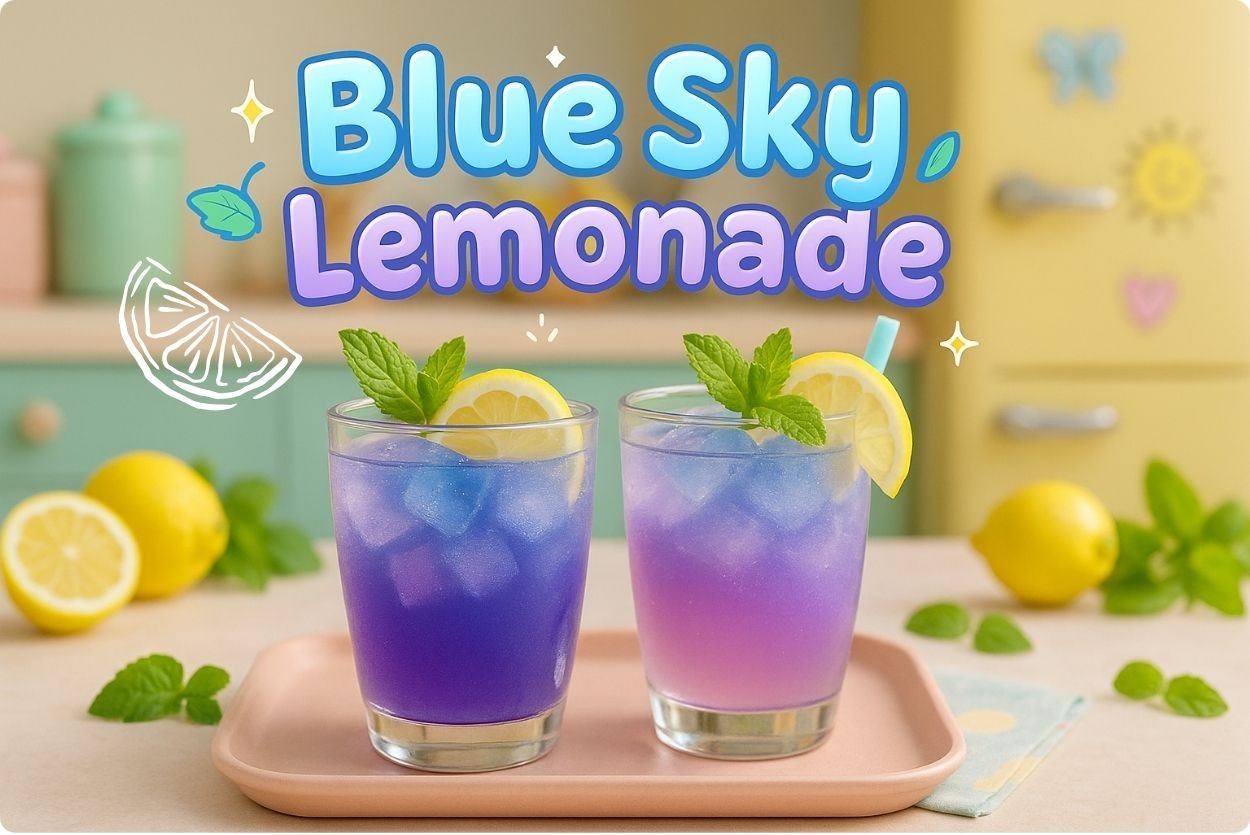
BLUE SKY LEMONADE(NO-COOK)
Kids learn how nature’s colors react when lemon meets magic blue ice — the perfect fun-science summer drink.
Prep: 10 min | Serves: 2
WHY YOU'LL LOVE THIS? (Highlights)
- Magical color-changing effect
- Teaches secienc through play
- Refreshing and healthy lemonade drink
- No Cooking- No stove, no mess
- Perfect for kids -parties or experiments
- Dried butterfly pea flowers : 6–8
- Hot water : 1 cup
- Honey :½ tsp (optional)
💛 For Lemonade:
- Cold water : 1 cup
- Lemon juice:1 tbsp (fresh)
- Honey or sugar syrup: 1 tbsp (optional)
- Blue ice cubes: 3–4 (prepared earlier)
- Mint leaves: 3-4
- Lemon slices: 1-3(For decoration)
🩵 For Blue Tea / Blue Ice Preparation
-
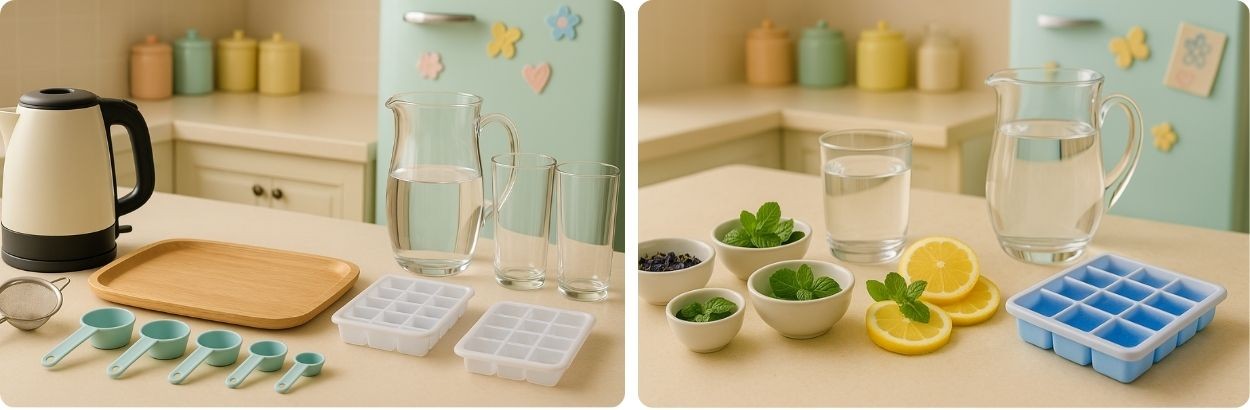
Heat-safe cup / mug / small jug — to steep the butterfly pea flower tea
-
Microwave or kettle — to heat 1 cup water (adult supervision required)
-
Spoon or stir stick — to stir the steeping flowers
-
Fine strainer / tea sieve — to remove the flowers cleanly
-
Measuring cup — to measure water accurately
-
Ice tray — to freeze the blue tea into cubes
💛 For Lemonade Mix & Serving
-
Glass jug / pitcher — to mix lemon juice, honey and water
-
Measuring spoons / cups — to keep sweetness balanced
-
Mixing spoon — for stirring the lemonade
-
2 clear glasses — to show the color-change effect
-
Small knife (optional) — to slice lemons for garnish
-
Serving tray / napkin (optional) — for neat presentation
Make-Ahead & Storage
- Blue tea cubes last 2 days in freezer
- Mix lemonade fresh each time
- Serve immediately for magic color reveal
SAFETY & HYGIENE (Precautionary Block)
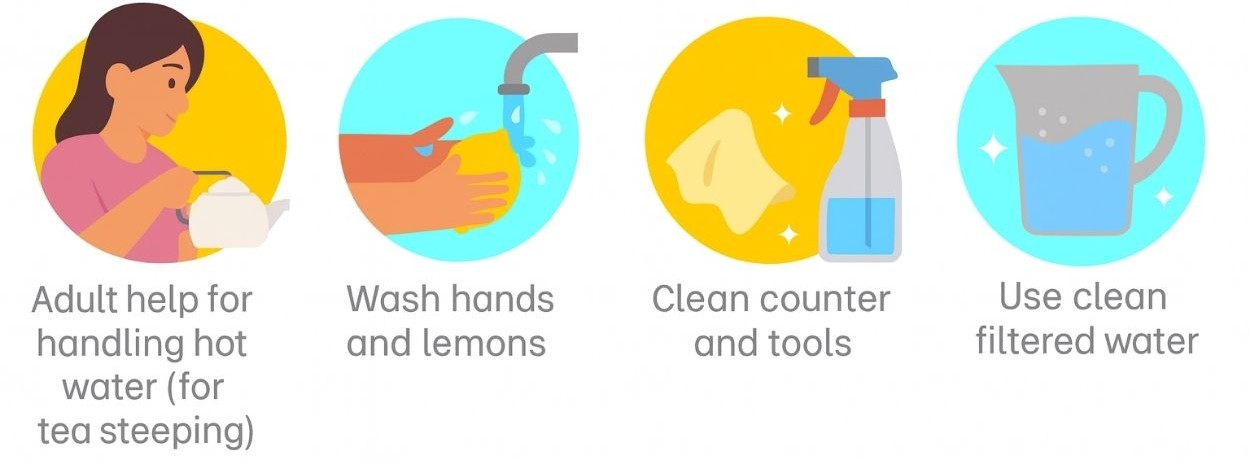
- Adult help for handling hot water (for tea steeping)
- Wash hands and lemons
- Clean counter and tools
- Use clean filtered water
- Handle glass carefully
HOW TO ASSEMBLE (Step by Step Guide)
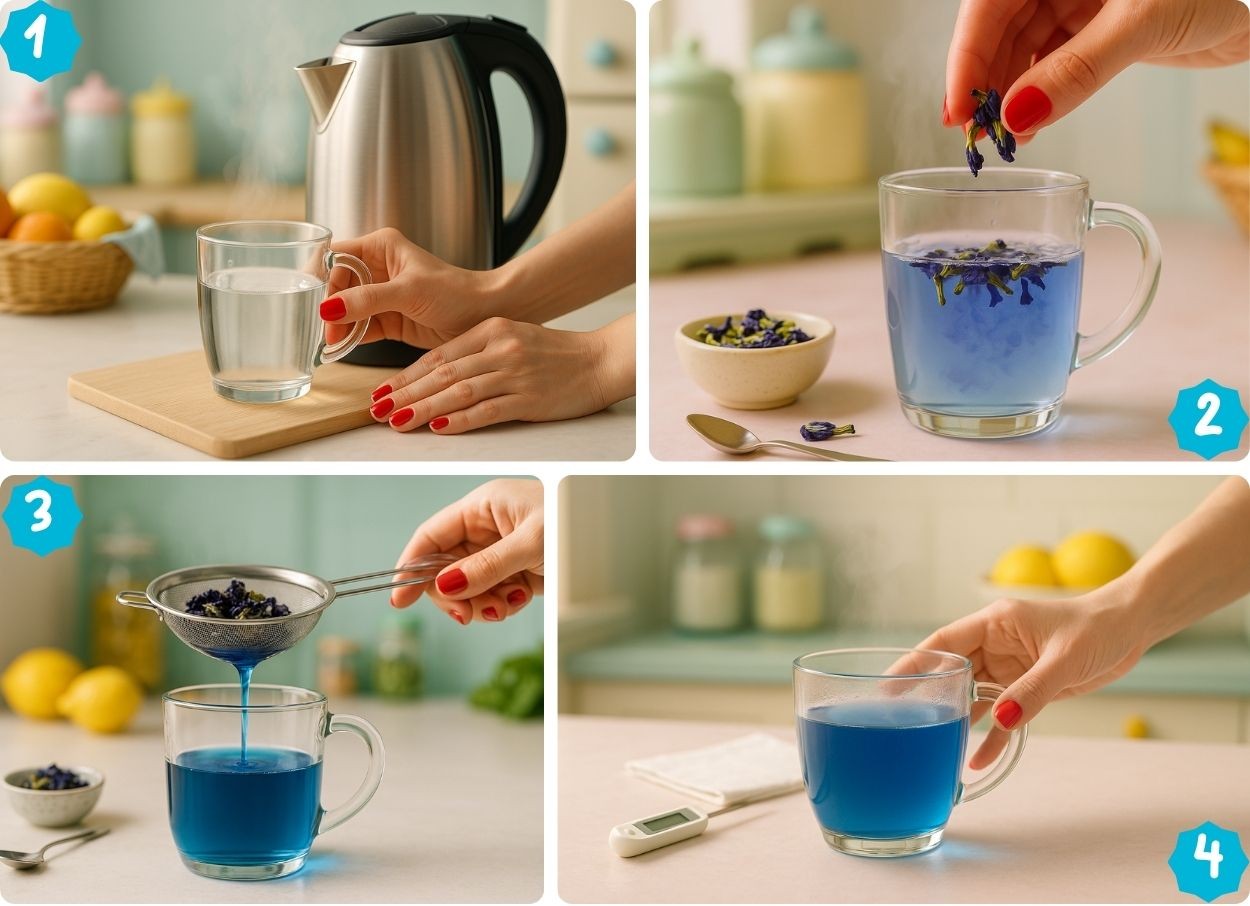
Step 1 — Heat Water
Action: Heat 1 cup water until hot (kettle or microwave ~1 minute).
Step 2 — Steep Flowers
Action: Add 6–8 dried butterfly pea flowers to the hot water and steep 3–4 minutes until the liquid turns deep blue.
Step 3 — Strain
Action: Strain out the flowers using a fine sieve to get clear blue tea.
Step 4 — Cool
Action: Let the blue tea cool to room temperature.
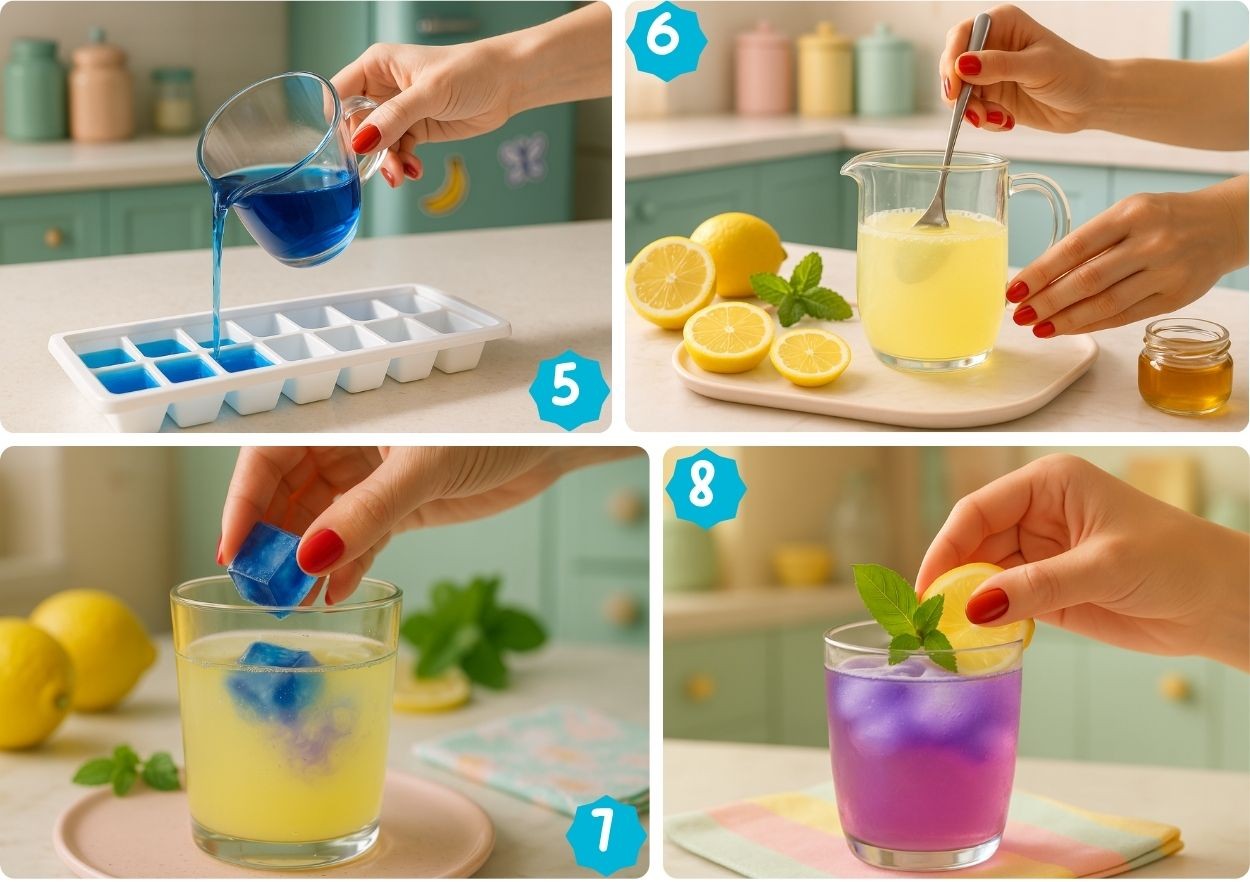
Step 5 — Add extras
Action: Pour the cooled blue tea into an ice tray and freeze until solid (2–4 hours).
Step 6 — Mix Lemonade
Action: In a jug, combine 1 cup cold water and 1 tbsp fresh lemon juice and add honey or sugar and stir
Step 7 — Add Magic Cubes
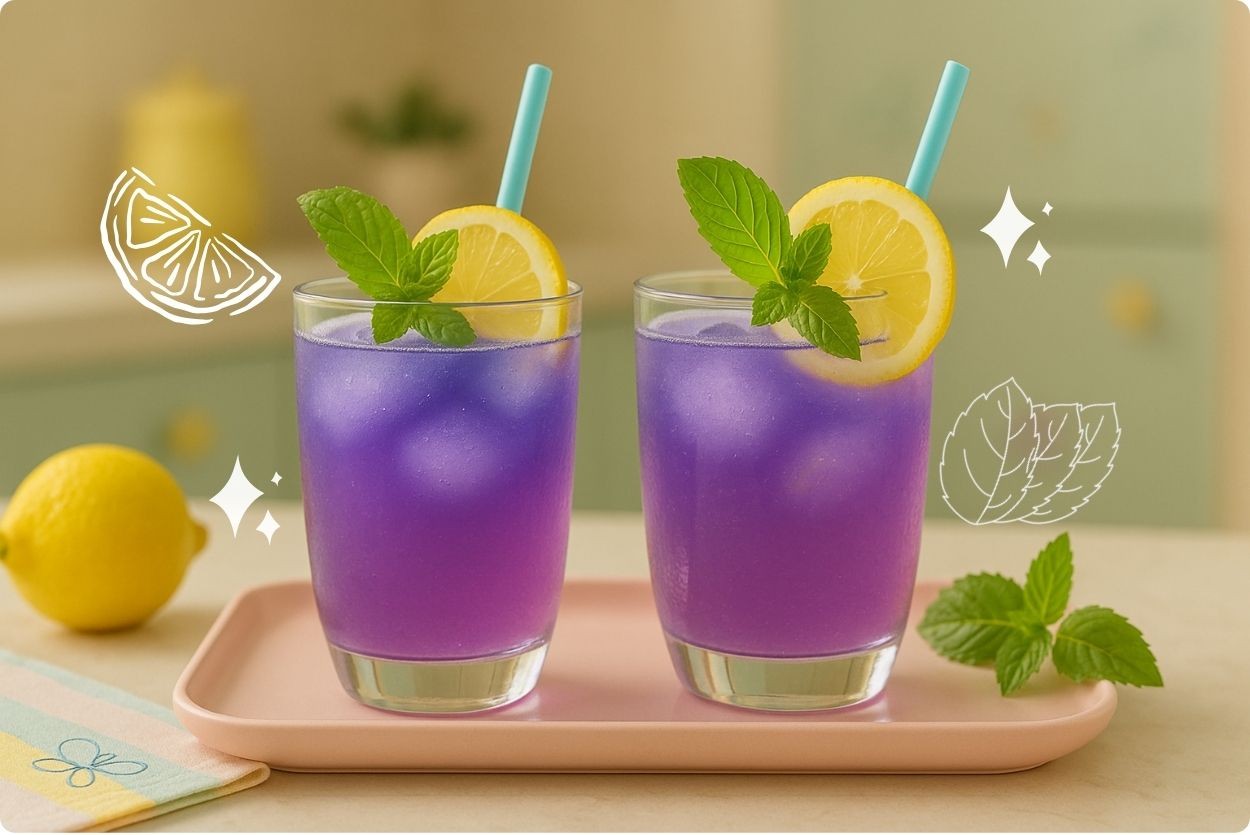
Action: Place 3–4 blue ice cubes into each clear glass and watch the drink from blue to purple as the cubes melt.
Step 8 — Garnish
Action: Add a mint leaf and a lemon slice to each glass.
Step 9 — Serve
Action: Pour the lemonade into the prepared glasses, add a straw, and serve immediately.
Tip: Try different fruit combos by season — peaches in summer, stewed apple in cooler months.
(Per Glass)
- Calories: ~300
- Total Carbohydrates: ~78g
- Sugars: ~74g
- Total Fat: ~0g
- Protein: ~0g
- Make blue ice overnight for easy prep.
- Replace honey with sugar syrup or skip.
- Add edible glitter for sparkle.
- Try lime instead of lemon for a green tint.
Q: Can I use normal blue food color instead?
A: Yes, but the magical reaction works only with butterfly pea flower.
Q: Can I make the blue ice early?
A: Yes, freeze it a day ahead.
Q: What causes the color change?
A: Lemon’s acidity reacts with the blue pigment — science you can drink
✅ Observation ( cause–effect learning )
✅ Patience and curiosity (waiting )
✅ Measuring & pouring practice (learning to do thing precisely)
✅ Science awareness — (acid–base reaction)